
|

|
|

The Digital Thread poses the real ChallengeBy Karsten Theis Almost exactly one year ago, I wrote "PLM integration is becoming a strategic issue" in this very same space. An increasing number of companies now also recognize just how important a sustainable integration strategy is if they want to be able to weave the digital thread across domains and company boundaries. As is so often the case, the aerospace and defense (A&D) industry is leading the way, having examined the performance capabilities of commercially available digital twin and digital thread solutions and future development trends in a comprehensive benchmark. In this benchmark, PROSTEP received high marks for the range of solutions it offers. 
The integration of PLM, ALM, ERP systems and other enterprise applications is not just a technical matter for companies in the A&D industry but also a strategic necessity if they want to be able to meet current and future challenges. There are a number of different reasons for this, starting with the increasing complexity of A&D systems, which are highly mechatronic and software-driven, and the associated interdisciplinarity of the development process. The A&D industry is subject to strict regulations and traceability requirements, which means that it must be possible to trace every requirement and every change across all systems. Without end-to-end data flows between the different IT systems, audits, certification and providing proof of safety become extremely time-consuming tasks that are prone to errors. In addition, aircraft, satellites and defense systems have long lifecycles and are repeatedly overhauled over the course of their lifetimes. The end-to-end linking of engineering, production and operating data is important if operation, maintenance and modernization are to be managed efficiently. A&D companies are increasingly coming to view the digital thread as the backbone of their digital value creation. The seamless linking of all product data, from requirements to design, production and operation, is essential if the digital twin or, more accurately, the various digital twins are to be kept up-to-date and consistent. These digital twins make a significant contribution to increasing operational efficiency, maintenance efficiency and, thanks to the linking of operating and engineering data, efficiency in product development. 
A major challenge when creating digital threads is the integration of and/or linking with partner data. A&D programs are often multinational collaborations with global supply chains and heterogeneous system landscapes. When it comes to defense projects, due consideration must also be given to data sovereignty and comprehensive compliance requirements. Coherent security concepts and access controls across all domains are only possible with an integrated system landscape. Seen from this perspective, it soon becomes clear why the Aerospace & Defense PLM Action Group (ADPAG) some time ago commissioned a benchmark that would allow it to assess the performance of commercially available digital twin and digital thread solutions based on typical A&D use cases. Many of these use cases were provided by organizations like the prostep ivip Association, which were involved in the benchmark as partners. Evaluation of the software solutions was planned and performed by CIMdata. 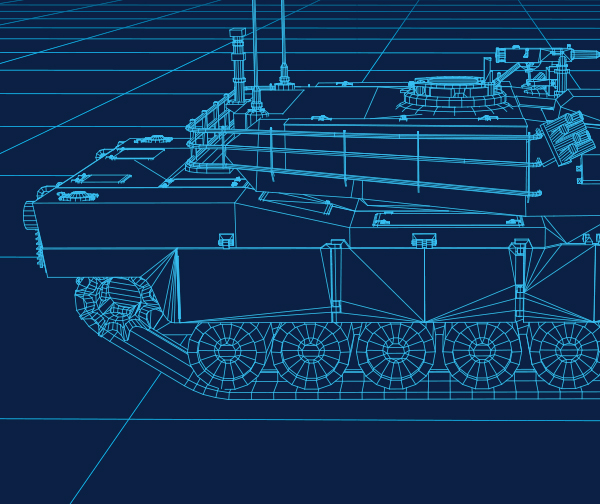
A total of seven software companies and service providers, including PROSTEP, took part in the benchmark. We established our bona fides as a leading specialist for interoperability, openness, data federation and cross-domain connectivity. We used our digital thread platform and the three brands OpenPDM, OpenDXM and OpenCLM to demonstrate the orchestration of heterogeneous PLM, ALM and ERP landscapes, secure standards-based collaboration, and the vendor-neutral implementation of a digital thread that supports a variety of different PLM backbones and data formats. The ADPAG jurors acknowledged our strategic positioning as a trusted, vendor-neutral partner for interoperability, the technical maturity, robustness and user friendliness of our solution, and our clearly structured approach to implementation. They also praised our strong support for open standards and our close cooperation with CIMdata and the ADPAG's various partner organizations. They see us as well positioned to provide support for incremental digital thread strategies that make evolutionary digitalization possible for A&D companies without the need for disruptive platform changes. However, they stated in their final report that, all things considered, the market for digital twin and digital thread solutions is changing rapidly and is currently still characterized by different approaches, a lack of maturity and a number of technological and organizational challenges. The most important and unifying insight gained during the benchmark is the fact that it is the digital thread that poses the real challenge. "Although the digital twin as a dynamic virtual representation of a physical asset is the ultimate objective, its accuracy and value depend entirely on the robustness of the underlying digital thread." Yours Karsten Theis |
|
| © PROSTEP AG | ALL RIGHTS RESERVED | IMPRINT | PRIVACY STATEMENT | YOU CAN UNSUBSCRIBE TO THE NEWSLETTER HERE. |