
|

|
|
The Digital Product Passport extends far beyond EuropeAn Interview with Thorsten Kirschner and Alexander König The digital product passport (DPP) not only brings the PLM and PIM worlds closer together but also requires closer collaboration with different standardization organizations. In this interview, Thorsten Kirschner, Senior Manager Industry Engagement at GS1 Germany GmbH, and DPP expert and Senior Manager Sustainability Alexander König, talk about the role that GS1 plays in this context. 
Question: What role does GS1 play in the field of standardization and how is the organization positioned globally? Thorsten Kirschner: GS1 Germany is one of 118 GS1 organizations and has a workforce of approximately 250. Worldwide, GS1 provides employment to several thousand people who, together with our users, develop global, cross-industry identification, communication and process standards. That is GS1's primary purpose. We currently have a portfolio of 25 global standards for the three functions identify, capture and share. The best known is probably the classic EAN barcode that you will be familiar with from your supermarket checkout. You can see how widespread our standards are by the fact that, according to an evaluation by Accenture, 10 billion GS1 barcodes are scanned every day – and not just in the retail sector. That means more scans than Google queries per day (approx. 8.5 billion). Question: What industries are the GS1 standards used in? Kirschner: At GS1 Germany, I'm responsible for what are referred to as "technical industries" . We take this to mean rail, construction, automotive, defense, conventional mechanical and plant engineering, and the maritime industry. GS1 now does business in over 20 industries worldwide. Over the past five decades, we have successfully established our standards first and foremost in the consumer goods industry, the healthcare sector and in electronic marketplaces. Technical industries have seen the strongest growth in the number of new participants in recent years. 
Question: What are the GS1 standards used for in technical industries? Kirschner: What we do in technical industries has a lot to do with PLM and PIM as it's all about an end-to-end approach to processes – from design to scrapping. Our portfolio covers the entire lifecycle of a product across different companies and systems. Not only are the objects clearly identified throughout their entire lifecycle – we also offer standards that make the structured exchange of the information associated with these objects possible across system, company and national boundaries. Question: What vehicles are used for data sharing? Kirschner: We make a distinction between three basic types of data. We have a vehicle called the Global Data Synchronisation Network (GDSN) that can be used to exchange article master data. Then we have transaction data, which can be exchanged via EDIFACT/EANCOM or XML. And we have the Electronic Product Code Information Services (EPCIS), a vehicle for exchanging event data that provides real-time answers to classic "W" questions: what happens when, where and why in the value chain. Question: Who implements these standards in the customer systems and processes? Kirschner: We don't implement our standards ourselves but instead make the documentation available to our implementation partners free of charge. SAP, T-Systems and IBM, as well as smaller start-ups, then implement these standards in their software if requested by the customer. Our 240 GS1 solution partners in Germany, for example, ensure the successful implementation of GS1 standards in practice. Question: Are your customers primarily software companies and implementation partners? Kirschner: That is just one of our target groups. We are also in direct contact with users in the above-mentioned sectors. Take for example the rail sector, where we develop solutions together with rail operators such as, for instance, DB, SNCF, ÖBB and SBB and their suppliers like Siemens, Stadler, Knorr-Bremse and CAF, which are then implemented by the solution partners, among other things. As a result, many trains in the European rail transport sector have already been equipped with a GS1-compliant RFID tag. This means that a rail operator, for example, knows exactly when a train has passed a certain point and with which parameters. Question: At GS1, focus is placed on the individual product. In the PLM sector, on the other hand, the structure of this product and the management of BOM information play an important role. Could the barcode provide the entry point to this BOM? Kirschner: From the perspective of the rail operator, a locomotive is an asset, but this asset contains components and parts from different manufacturers, which ideally I have identified using my GS1 code or RFID. This is little more than a unique identifier that is free of overlaps, for example a serialized Global Trade Item Number (GTIN) that references further information in the corresponding IT systems. This can be a PIM, PLM or ERP system. GS1 does not manage any data for customers. Question: What role do GS1 standards play when it comes to creating digital product passports (DPP)? Alexander König: To answer this question, we need to take a closer look at the DPP system. The key figure is the Responsible Economic Operator, who places the product on the market and is responsible for creating the DPP. The operator hosts the DPP data, probably in a decentralized manner on its own product page, where all the relevant information is listed. The DPP will have a unique product identifier, which must be in line with an ISO standard. This can be a GS1 standard. This identifier can then be applied to the product using a data carrier like a QR code in conjunction with GS1 Digital Link so that the information can be retrieved using a smartphone or other end device. Thanks to its resolver capabilities, GS1 Digital Link ensures that different users and roles receive different information despite the fact that they are using the same URL to access the product page. Question: Who maintains the databases associated with a DPP? König: The DPP system will normally plan for the distributor of the product to host its own data. There will also be a EU registry, very similar to a telephone book, in which you can look up where which information is located. But there will be no key player that hosts all the DPP data. In addition, every DPP will have a backup with a service provider in case the distributor goes out of business. 
Question: What impact will the DPP have on the PLM and PIM worlds? König: As we don't yet know which information for which product groups will have to be included in the product passport, the discussions about where this information originates are still very abstract. There is a horizontal level, which describes how the DPP system should work. This system will be the same for all product categories. But then there are the vertical topics, the DPP data, which are product group-specific. A distinction must be made here between product groups for which regulations already exist and are now being updated, and product groups for which new regulations need to be formulated. This is done via what are referred to as "delegated acts". The content is currently being worked out in the Ecodesign Forum, and it is difficult to make concrete predictions about content or report levels prior to publication. Question: What about sustainability, which is actually the key driver behind the DPP? König: The objective of the DPP is to make the way we produce and consume products more sustainable, but where this gain happens will vary from product group to product group. In the case of consumer goods, the key element is the consumer's purchase decision. For example, that the consumer knows what environmentally harmful substances the detergent they are buying contains or does not contain. In the case of technical products, the sustainability aspect often only comes into play after the purchase decision has been made. With an industrial battery, it's not a sustainable purchasing decision that's important but rather the maintenance and recycling processes, something for which the DPP requires entirely different information. This is where the EPCIS standard possibly comes into play as it ensures that maintenance and repair-specific events that take place after purchase can be added to the DPP in a structured form. Question: Is it even possible for small and medium-sized companies to get to grips with the time and effort that the DPP involves, or are we reducing our ability to compete seeing as this is essentially a European initiative? König: The DPP extends far beyond the EU. We know that China is also working hard on a digital product passport. And there are global efforts to anchor the DPP at ISO/IEC level. Europe is to some extent serving as role model here. This means that a framework is being created here that will ideally ensure that there won't be different digital product passports for different regions. I'm sure that it will also be possible for small and medium-sized companies to create a DPP if they start with a rudimentary data set and then develop it iteratively. If it has to be an all-in-one solution right from the start, it won't work. But the industry associations have joined forces to a sufficient extent for Brussels to have got this message. 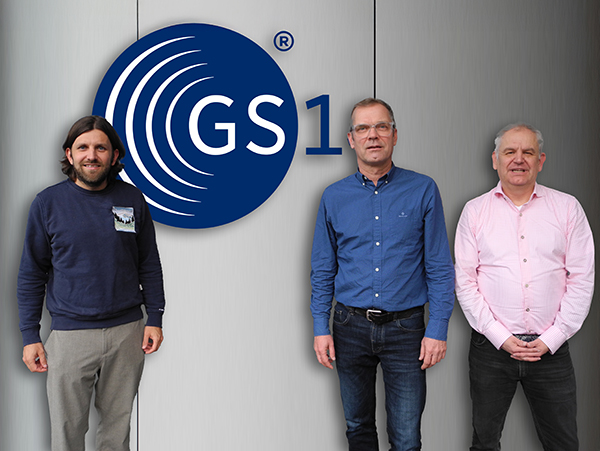
Question: You are providing support for the third Interoperability Summit in May 2026 together with the VDMA and the prostep ivip Association. Where do you see a need for greater interoperability? Kirschner: We are involved in this event to a greater extent than in the past as we are intent on demonstrating the openness and interoperability of our standards. In technical industries, for example, we're interested in developments like the Asset Administration Shell (AAS) and the GS1 Digital Link that is derived from it and which connects physical products to their digital twin. Question: Which organizations is GS1 in competition with? DIN, for example? Kirschner: No, in fact we are collaborating with DIN. We are positioned in such a way that our standards can be used across all industries. There are other standardization organizations that place great focus on a specific sector, e.g. medical engineering or the financial sector. In some cases, there are competing standards. But overall, we're doing very well, particularly when it comes to identification in the different industries. Question: What category would ECLASS fall into? Kirschner: We have to make a distinction between identification and classification. Our Global Product Classification (GPC) system provides us with our own standard for product classification, which is particularly important in the fast-moving consumer goods sector. Which is why we signed a Memorandum of Understanding (MoU) with ECLASS a few years ago. We consider the standard to be highly relevant for classification in technical industries. We also have an MoU with the VDMA. Gentlemen, thank you very much for this interview. About the people being interviewed As Senior Manager Industry Engagement at GS1 Germany, Thorsten Kirschner is involved in digital transformation in technical industries. His focus lies on the application of global GS1 standards in different industries. He places emphasis on promoting the interoperability of standards in the context of Industry 4.0, optimizing management in the rail sector by means of transparent and efficient material and information flows throughout the entire product lifecycle and the integration of GS1 standards in building information modeling (BIM) in the construction industry, among other things. Alexander König is Senior Sustainability Manager at GS1 Germany and is driving implementation of the digital product passport (DPP) forward – with focus placed on consumer goods, fashion, detergents and cleaning products, as well as retail. He previously held the position of Head of Business Innovation at the circular economy pioneer BuyBay, where he was responsible for scaling recommerce solutions. König combines regulation, technology and impact with the aim of speeding up the transition to a more circular and data-driven economy. |
|
| © PROSTEP AG | ALL RIGHTS RESERVED | IMPRINT | PRIVACY STATEMENT | YOU CAN UNSUBSCRIBE TO THE NEWSLETTER HERE. |