
|

|
|

Artificial Intelligence – a Revolution Full of OpportunitiesBy Karsten Theis People say that the French Revolution devoured its own children. Artificial Intelligence, on the other hand, is a revolution that has the potential to feed and nurture future generations - provided those generations actively help shape future transformation. AI offers them the opportunity to free themselves from monotonous tasks and focus more on creative, value adding, and meaningful activities. That’s why we at PROSTEP are deeply engaged with potential applications of AI in engineering, exploring both its opportunities and its limitations. 
From our work with AI so far, we have drawn three important lessons: We see this transformation very concretely in software development. AI based applications like RelAIable now take over time consuming and relatively unattractive testing tasks, for example involving graphical user interfaces that were previously difficult to automate. We use such tools to continuously test and improve our customers’ PLM or ALM system interfaces. 
Combined with our in depth system knowledge, we can more efficiently put new software versions into productive use. This not only increases our customers’ competitiveness but also creates new, highly qualified tasks related to the integration, further development, and strategic use of AI. Second, when used effectively, AI will significantly boost productivity. Our experienced software developers report that AI based tools make them much faster when programming. Thanks to their expertise, they are also able to verify what the AI is doing. The challenge is to pass this expertise on to the next generation of software developers and prevent them from blindly trusting AI. This is essential to ensure the reliability of program code. Third, reliability and reproducibility are major challenges when using AI, particularly with large language models (LLMs). This is another key lesson we have incorporated into our AI tools and applications. Only AI applications that deliver reliable and reproducible results can meet increasingly strict traceability requirements and are thus suitable for productive use in engineering. 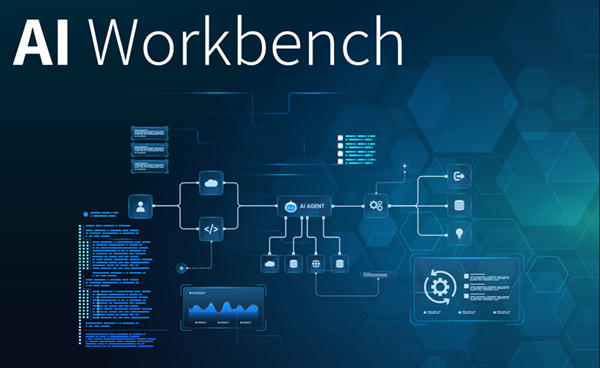
One way to ensure reproducibility is to combine AI functions with deterministic program code. We follow this approach in developing our AI Workbench, a modular system that enables the creation of complex AI applications capable of reliably generating reproducible results. Key features of KI Workbench include AI based information retrieval functions, systematic AI orchestration, and ontology based standardization of all accesses. We expect significant efficiency gains from using the PROSTEP AI Workbench, particularly when analyzing complex PLM data sets originating from different source systems. For example, when certain components fail, it can determine possible root causes by correlating requirements, component data, test cases, and test results. There are numerous potential use cases in engineering that such a powerful and flexible AI framework can address, provided (and this may be a fourth lesson) that the quality of the input data is right. Ensuring this has always been one of our core competencies. Yours Karsten Theis 
|
|
| © PROSTEP AG | ALL RIGHTS RESERVED | IMPRINT | PRIVACY STATEMENT | YOU CAN UNSUBSCRIBE TO THE NEWSLETTER HERE. |