
|

|
|

PROSTEP advises Dental Technology Manufacturer Dentsply Sirona on PLM SelectionBy Martin Strietzel Even market leaders sometimes need outside support. This is why dental technology manufacturer Dentsply Sirona turned to PROSTEP for strategic consulting when searching for a new PLM system. Our consultants not only helped the company select a system but also looked at the PLM processes and suggested improvements. 
With sales of nearly $4 billion and over 14,000 employees, Dentsply Sirona is the world's most diversified manufacturer of dental products and technologies. The company was formed in 2016 by the merger of DENTSPLY International Inc. in York, Pennsylvania, USA, founded in 1899, and Sirona Dental Systems GmbH in Bensheim, a former Siemens subsidiary whose roots also date back to the 19th century. The first dental product in Sirona's history was a foot operated dental drill developed in 1887. While Dentsply Sirona manufactures primarily consumables, laboratory supplies and implant components in the United States, the company designs and manufactures its dental devices in Bensheim, Germany, where the world's largest research and development center is located. Important innovations have been created here over the past decades, from the CEREC system for CAD/CAM restorations in the practice, consisting of an optical intraoral scanner, milling unit, 3D printer and sintering furnace, to dental 3D computed tomographs and PAN/CEPH X-ray systems, to complete dental chairs. "Our most important innovation right now is DS Core, our cloud-based ecosystem. It is used to connect dental medical devices, keep medical data centrally for evaluation, diagnosis and patient communication, and subsequently use it for therapy planning and tracking and dental collaborations," says Dr. Kai Lindenberg, Director R&D at the Bensheim site. 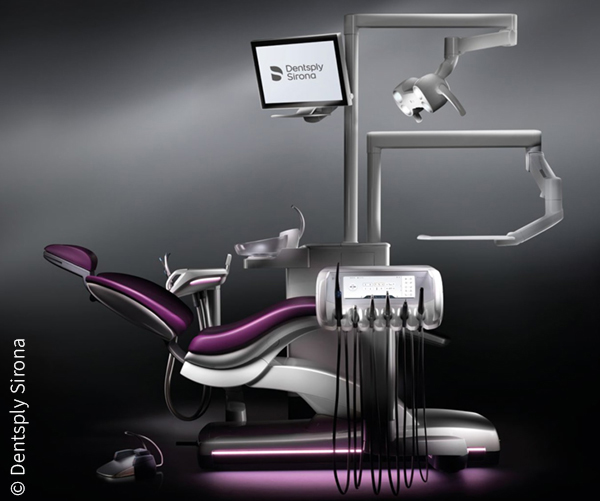
Linking dental medical devices to the cloud opens up the opportunity for the company to expand new service-oriented business models, Lindenberg goes on to explain. "Continuous device monitoring is moving us from Find and Fix to Predict and Prevent." Changes to the devices via software updates or the replacement of hardware and software components must also be supported by the software platforms. The regulatory authorities require medical device manufacturers to prove that their products have been tested and function in every stage and variant. The PLM system plays a central role in this. No Configuration Management The German site is very well positioned with regard to digital product development, Lindenberg says. As part of the private equity buyout of Siemens Dentaltechnik, Dentsply Sirona (Sirona at the time) had redesigned its processes and digitized approval management, project status tracking, and other processes based on the Agile E6 PLM solution, even though the processes were not fully automated. What the old system could no longer accurately map was end-to-end configuration management with full traceability, Lindenberg says. Also, the software did not evolve and therefore had to be replaced sooner or later. 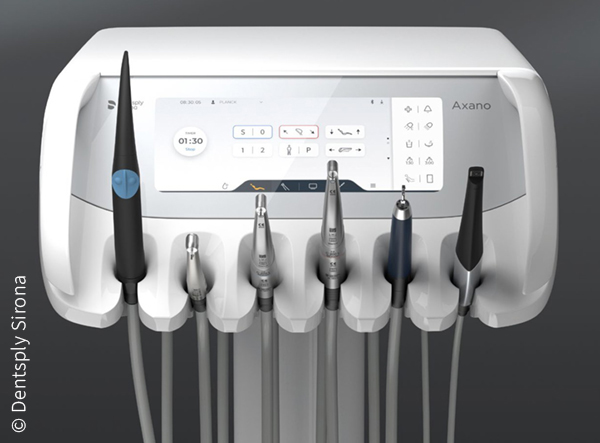
The company initially dwelt on introducing a simple, obvious alternative, but then decided to have a broader choice of systems. "We knew early on that we needed the support of professionals who knew how to work in PLM because we didn't have that expertise in-house," says Lindenberg. "And we needed a consulting firm that knew what was important to implementing PLM and could guide us through the entire process." PROSTEP was chosen because the consulting and software company Dentsply Sirona had already provided Polarion with very competent advice when selecting the ALM solution a few years ago. Polarion is one of the core enterprise applications at Dentsply Sirona, alongside Agile E6 and SAP, and the leading system for requirements management, both for hardware and software development. The ability to connect the ALM system to PLM was therefore an important requirement for the future IT architecture in addition to the integration of the SAP solution, in order to ensure digital continuity. "However, none of the PLM systems we looked at were able to map the full complexity of software development," says Kai Lindenberg. "There's still a little bit to do." Analysis of PLM Capabilities Prior to the actual system selection, the consultants conducted several workshops with stakeholders from across the organization to analyze existing and future PLM capabilities. The PROSTEP Capability Map served as the basis for creating a target concept. 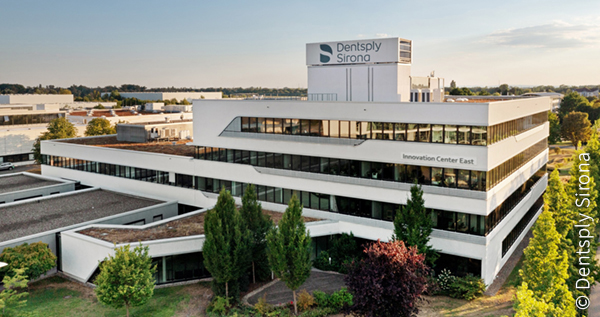
"We wanted to see what's the state of the art with all PLM vendors today and how other users are using PLM capabilities, all of which product is independent of the product," Lindenberg explains. A key requirement for the future PLM solution, which emerged from the analysis of PLM capabilities, was to ensure traceability. Traceability is not only about relationships between parts, 3D models, and drawings, but also about dependencies on the corresponding documentation, production lines, manufacturing work instructions, test equipment, etc., especially when testing is safety-related. "The primary driver of this requirement is regulatory requirements, but when you put it cleanly, you realize that it also has advantages for your own quality assurance," Lindenberg points out. The project team also placed great emphasis on the ease of use of the software, as it is intended to be used by a broad group of users who are not traditional PLM users but only occasionally call up the system. In Bensheim, there are 500 to 600 permanent and occasional users, not just in engineering and engineering, but in product management, purchasing, regulatory and other areas. Therefore, the barrier to entry must be very low and the processes must be self-explanatory, as Lindenberg says. "We place a lot of importance on the person who is creating or bringing in the information from outside the system being able to put it where it belongs in the system." Cloud or cloud capability of the PLM solutions was not a primary criterion when selecting the system, precisely because Dentsply Sirona is open to the cloud in principle, as evidenced by its own cloud ecosystem DS Core. However, it has become clear that a SaaS solution is out of the question because it is difficult to customize. Whether the new PLM system will ultimately be installed on-premise or as a managed PaaS solution in the cloud is not yet clear, Lindenberg says. 
Benchmark with multiple Use Cases After an initial product presentation, the project team selected a handful of vendors from a larger pool of vendors whose systems were shortlisted. The focus was on how well vendors understood the problem and how well their solutions supported the development of standard scope medical devices. Shortlisted systems were then benchmarked in greater detail against a set of use cases defined by the project team. It turned out that the systems were not very far apart functionally, as Lindenberg says. "However, we would have had to purchase far more functionality from a vendor than was necessary for the project. “ Price played only a minor role in the system decision. The decisive factors were usability for casual users, comprehensive coverage of medical device-specific basics and the good configurability of the software or the possibility to adapt it yourself. Which PLM system won the race cannot be disclosed yet for compliance reasons. However, to PROSTEP's surprise, it was a different candidate than the one originally favored, Lindenberg says. Dentsply Sirona will now go into a round of workshops with PROSTEP and the vendor to plan the rollout properly. This includes planning for data migration, which is very important for Dentsply Sirona because the company needs to have access to data for up to 10 years after a product is discontinued. "The PROSTEP consulting project helped the team to make a sound system selection, even if it did not significantly reduce the time frame of the decision-making process," Lindenberg explains. "Without external expertise, we would have had to make the choice without the necessary transparency due to the lack of objective comparison criteria. PROSTEP has helped us make a sound decision because we have analyzed our business processes deeply from a PLM perspective and now have a better understanding of the standard workflows of modern systems." With the introduction of the new PLM system, Dentsply Sirona will optimize numerous processes, especially at the interface between PLM and ERP. 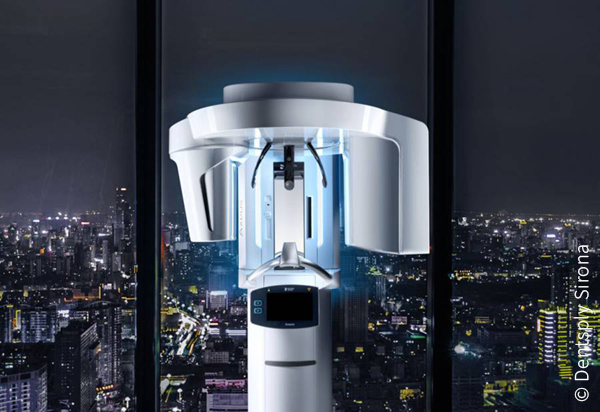
|
|
| © PROSTEP AG | ALL RIGHTS RESERVED | IMPRINT | PRIVACY STATEMENT | YOU CAN UNSUBSCRIBE TO THE NEWSLETTER HERE. |