|

|
|

Integration has many different DimensionsBy Mirko Theiß Integration is about so much more than merely connecting individual systems. If end-to-end digitalization is to be achieved, companies must address multiple dimensions at the same time. The integration of data, processes and systems within a company in particular determines the viability of the digital thread. PROSTEP provides support for these complex requirements placed on heterogeneous system landscapes with a powerful digital thread platform. The way in which the term "integration" is understood often only touches the surface. Creating connections between applications may solve local coupling problems, but it does not tackle the overarching complexity. Digital transformation requires a multidimensional view of integration that includes data, information, processes, systems, organizations, technologies, lifecycles and knowledge. Only if these dimensions are designed and orchestrated in a deliberate manner is it possible to create a reliable digital thread that covers the entire product lifecycle. Product information is created in a number of different domains (ALM, CAD, PLM, ERP, etc.), it is managed in specialized management systems, and the information made available in the environments of the parties involved must be consistent and up to date. Without proper data integration, there is a risk of inconsistencies leading to errors in development, production and service. Robust data integration ensures that master data, structures and models can be clearly referenced across system boundaries and that version references remain traceable. Correct mapping is crucial in this context: not only must BOMs, 3D geometries, simulation results and quality-related data be exchanged technically, but they must also be interpreted in the same way in the views of the parties involved. 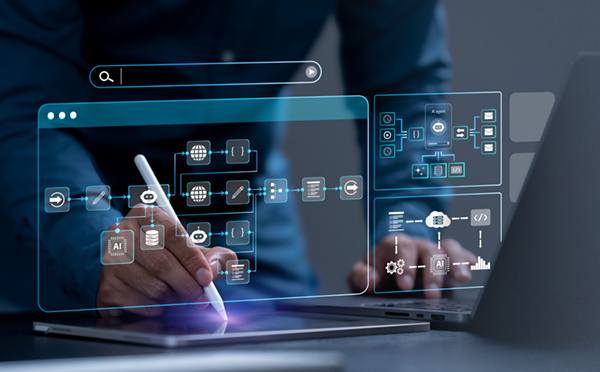
Cross-departmental workflows are often not integrated end-to-end, which results in delays and errors. Change management, approvals and configuration processes are examples of workflows that grind to a halt without cross-domain integration. Effective process integration defines end-to-end workflows across the systems involved, automates handover points, ensures traceability between activities and results and anchors governance rules where they have an impact: in the operational processes. Only when this is achieved is it possible to create a reliable flow of information from the initial idea for a product to development and production through to operation. ALM, PLM, ERP, MES and IoT platforms often work in isolation from one another, thus leaving the digital twin incomplete. Modern system integration provides scalable, standards-based interfaces that function both synchronously and asynchronously and make traceability possible. It takes account of performance aspects, security and maintainability. The aim is to create an integrated ecosystem in which information from requirements management, product data management, ERP, production control systems through to customer service enriches the digital thread via interlinked product models and reduces present-day fragmentation. 
There are also other dimensions that must not be ignored:
Placing focus on internal data, processes and systems determines the success of end-to-end digitalization. If these dimensions are not designed consistently, media discontinuities and a fragmented flow of information, which always requires manual reworking, are created and have a significant impact on quality, costs and time-to-market. On the other hand, those who establish semantic consistency, orchestrated workflows and standards-based connections between systems create the basis for reliable digital twins and true traceability throughout the product lifecycle. The challenges are considerable but they can be overcome. PROSTEP's digital thread platform addresses precisely this complexity. It offers standards-based components for data and process integration, reliably links heterogeneous systems, ensures traceability by means of artifacts and activities, and can be integrated flexibly in existing IT landscapes. This means that integration is not an obstacle but rather a strategic enabler of digital transformation – with a higher level of data quality, stable processes and a complete digital thread. 
|
|
| © PROSTEP AG | ALL RIGHTS RESERVED | IMPRINT | PRIVACY STATEMENT | YOU CAN UNSUBSCRIBE TO THE NEWSLETTER HERE. |